Sasak Traditional Houses You Can Find in Sade or Ende Hamlet

Lombok traditional house

Lombok Traditional Houses


Lombok traditional house of Sade sub-village is part of Rambitan village, Pujut sub-district, south central of Lombok which is currently packed into a tourist destination.

For those tourists who want to know how the Lombok people in the past are still left with a picture of the Sasak that can be seen from traditional building architecture. consists of thatch roofs whose skeletons are only bamboo sticks that are not nailed only tied with palm fiber or rope made of bamboo rope.

Lombok Traditional House Condition

The walls are woven bamboo or called Bedek, the floor consists of ground floors whose surfaces are covered with buffalo as a substitute for cement, shiny and also to harden the surface of the floor or as a function of cement he said that if you sleep on the floor to be warm and the mosquitoes do not dare to approach.

Lombok traditional houseThe building consists of as fast, Sekenem (6 post gazebo), Lumbung, houses where they live with terraces, even though there is electricity the traditional house of Sade which consists of 150 family heads still use traditional lighting to maintain the authenticity of traditional houses.

Even the location of this hamlet in front of the slippery asphalt road to Kuta beach for that when coming to visit this place do not mind to give donations as low as possible so that the village of Sade can be preserved and the shape of the building is very well.

Read Also: Traditional Village Of Segenter Under The Foot Of Mount Rinjani

Maintained right if there is a part of the head of the family who wants to make a house with a modern architecture concept must be outside the environment of this traditional house.

Lombok Traditional House Today

Over time there are some that have been contaminated with city life that is watched through television media they are also no longer able to occupy this heritage house but they use it to sell souvenirs within this traditional village.

From Lombok International Airport, it is only about 8 km away and from Kuta beach it is about 7 km away.

So anyone who wants to visit Kuta beach can stop by here because of its location on the side of a big road there is a large parking lot across the road and now there is Indomaret next to the parking area.

Later if you enter the traditional house it will be guided by a local guide into their village but beforehand will be explained first the procedures and history of this traditional house then the local guide will introduce everything contained in this village and Don’t forget to pay donations for a local guide, you have to pay.

Mayura Hindu Temple, in Cakranegara City Of Mataram Lombok

mayura

Mayura Temple

Mayura hindu temple is a legacy of the Mataram kingdom which was built since the 17th century which is located in Cakranegara which is included in the municipality of Mataram, currently a historical and religious tourism destination.

Especially very closely related to the history of the formation of Lombok’s multi-ethnic community, especially the presence of Hindus in Lombok.

Mayura ParkWhich previously began with the arrival of Anak Agung Ngurah Karangasem and his soldiers to expand the kingdom’s territory in Bali.

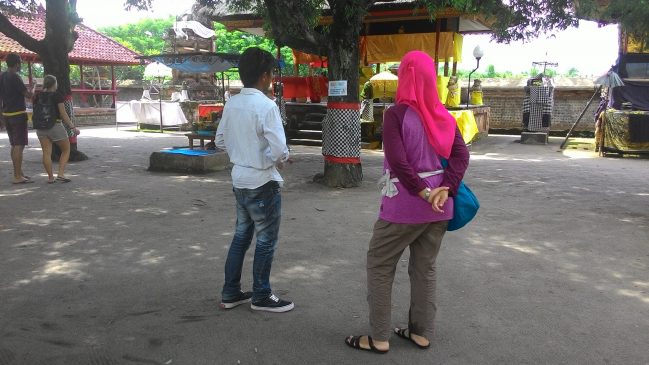
There is no resistance from the kingdom that has existed in Lombok before as well as the Selaparang kingdom because it is found in East Lombok, even stories from parents when the first troops from Bali came to set foot on Lombok through the west side of Lombok island and had time to camp in the Dasan Agung sub-district.

The name Dasan Agung is taken from the history of his camp, Anak Agung, the Dasan in sasak means place and Agung which is defined by Anak Agung until the word Dasan Agung, which now means “the place of Anak Agung” means camping.

Mayura Park, which used to be called the Kelepug Park, means the sound of water falling because there is a water source coming from the slopes of Mount Rinjani until its name is changed to Mayura, which means peacock because it is said that there are many snakes and a king’s friend from Paskistan.

Advise solutions to overcome the many snakes in the park by bringing peacocks so that snakes can be preyed on by peacocks and this idea is considered successful by the king until the king rewards his friends from Pakistan by making a statue now in the garden resembling the Pakistani news source I got it from the Lombok TV program.

There are still some statues that resemble the Chinese and some other statues, but for more details, let’s come and for more details, we can ask the Local guide there, there is a name, Mr. Agus

Whose posture is big, Mr. Agus will invite you into and invite you to the hall Kambang and from here will be explained about all the objects in the park but actually every visitor must wear a red scarf and how to tie it is not arbitrary depending on status.

If you have a partner or are married the scarf ties must be on the left side of the waist, if it’s still a single, the scarf ties around under the navel and if you already have a candidate you should tie the right waist about the intention of coming to ask Mr. Agus.

The atmosphere is now the most up to date beside the Mayura Park wall, near the parking lot there are many people who market agate which seems to be less attractive because the stone traders putting up a tarpaulin placed on the garden wall also create a traffic jam when city people return from the office where they work.

Lingsar Temple Harmoni Historical Among Hindu Bali And Sasak Islam

Lingsar Temple

“Lingsar temple.” Considering one of Lombok’s tourism slogans in Bali there is no Lombok but in Lombok there is Bali, that is the meaning of a word that means that in Lombok there are many descendants of Balinese Hindu society with Hindu teachings which have developed since 3 centuries ago with the invasion of Karangasem kingdom in Bali to Lombok.

Until now this descendant has become a part of Lombok people who are Hindus who have the style of building houses and places of worship so that visitors can also feel the atmosphere of Bali in Lombok such as the existence of Lingsar temple in Lingsar sub-district, West Lombok regency which is a symbol of harmony between the two religions namely Islam and Hinduism.

Stone which is this symbol if recalculated with the naked eye is always a different number

In this place there are 2 places of worship side by side which consist of temples in the north called Gaduh and in the south there is a building where Muslims worship when Wetutelu and between the two religions tolerate each other.

Including making an agreement not to bring pork food in This place is because it is harm for Muslims and is forbidden to bring food from beef because cows are animals that are considered sacred by Hindus every year between the two sides of Hinduism and Islam when they conduct war ketupat by throwing each other with a diamond as a symbol gratitude for the abundance of fortune given by God for the abundance of crops.

Lingsar temple
In the courtyard of Lingsar Temple, Mrs. Dina with a local guide

Lingsar Temple is a symbol of harmonization for religious life in Lombok so that this place is used as a Lombok tourism destination because every visitor will feel something unique here because how can a different understanding can worship in the same place and unify this temple’s vision built by Anak Agung Ngurah Karangasem in 1741 because the king had a wife from Lombok until the king gave a place in the temple area Lingsar to build a place of worship for Islam wetutelu for more details let’s visit and we listen to local guides who tell stories.

Every visitor who comes to this place will be charged a tourist entrance ticket and later pay for a local guide, before we are invited to go to places – objects that will be told local guides will take us to a shady place and then introduce themselves before telling the place in around the Lingsar temple area here consists of many local guides, one of whom I know most, Mr. Yan, whose real name is Sayang because among the local guides Mr. Yan at Lingsar temple, the best way to be your guide.

holy eel
When the handler calls the eel out with an egg

Before entering every object we must first wear a yellow scarf tied to the waist as a symbol of respect, perhaps this is very common to do things like this in every place to enter the temple object because this is always required as we visit the temple in Bali.

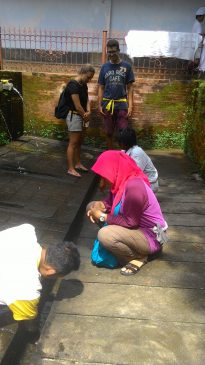
After each wear only a yellow scarf on the waist will we go into the temple area inside there is a pond inside which is inhabited by tuna (like eels but large) which is hundreds of years old and is considered sacred and we can see by pulverizing boiled eggs into pond-sized water 6 x 6 meters and in the middle of the pool there is a statue but no guarantee this giant eel will come out only lucky visitors can see it.

Then in this place there is the ritual of throwing coins into the pool by turning the column while praying after each time and then throwing coins into the pool by throwing money back through the top of the head, not infrequently throwing us sometimes into the pool.

For sure this coin we buy in the area of ​​the temple with a lower exchange rate and the money that is widely contained in the pool will be collected again for the improvement of the park area of ​​the temple LINGSAR then we will go to the place where we worship Islam Wetutelu and to be clearer the story is better we just visit it and we ask Pak Sahyan.

Narmada Temple Water Palace & Park Not Far From Mataram City

narmada-park

Narmada Park

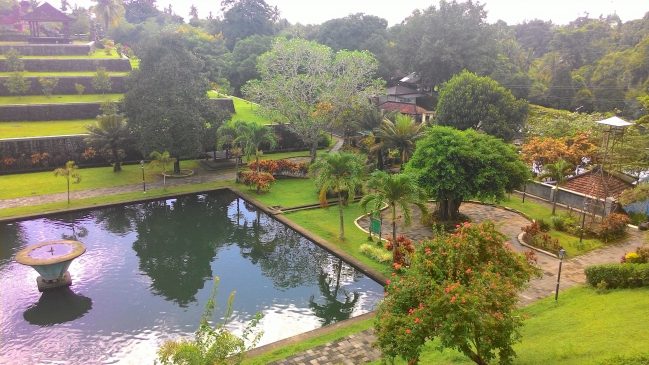
Segara Anak pool in Narmada Park, right again public bathing pool and Mermaid Pool

Narmada Temple located in Narmada Park which is a cultural heritage site preserved by the NTB government under the auspices of the culture and tourism department is located approximately 10 km from the city of Mataram to the east in the village of Narmada.

Lembuak village exactly not far from the intersection of three main roads across the province and north of the road to Duman village or the path to Lingsar or Suranadi.

Swimming pool and Duyung (mermaid) pool in Narmada Park

This place is a legacy of the Mataram kingdom which was built in 1727 by the king of Anak Agung Ngurah Karangasem to be used as a place for the celebration of pakelem every full moon to 5 years of Caka (October – November) which covers 2 hectares and consists of Balai Loji building, petirtaan hall, Duyung Pond, Lake Segara Anak, the surrounding area Anyar Park which is now a residential area and Taman Peresak which has now become an orchard (until now durian Peresak is very popular)

Swimming pool and mermaid pool in Narmada Park

This place in the era of the 1980s was very popular to visit for the people of Lombok, especially on school holidays or after the Eid-ul-Fitr holidays by paying entrance tickets through the west side entrance of this park.

The main entrance that used to be on the north side is when this intersects with the main highway which is heavy traffic and only 20 meters away there is a traffic light (red light) which makes it impossible to be used as a queue to buy entrance tickets.

Di setiap tempat akan ada tulisan-tulisan seperti ini, yang menjelaskan tentang lokasi di taman Narmada

Every visitor who arrives at this park for those who come are outside guests or tourists from tour agents, there are already local guides who are ready to guide and explain all things in the Narmada park, including the history of the establishment of Narmada park and the temple in the park Narmada.

First you will be invited by a local guide to the Loji hall to look more closely at all parts of the park because the Loji hall consists of a hall that resembles a stage, this place was used by the king as a place to rest while enjoying the view of the park.

Seeing the Meru temple from a distance in Cakranegara, from here a local guide will explain clearly about the objects in the park before we are invited to the temple and Petirtaan hall.

Narmada sub-district is called the city of water because in this place is very abundant with water including bottled water whose NARMADA brand produced in Narmada sub-district including the word AIR is also the watchword of NARMADA sub-district namely: Aman Indah and Rapi Narmada park reconstructed in 1980 – 1988 on a budget APBD and used as a tourism destination. For visual tourism information about Lombok you can subscribe our Chanel YouTube “Lombok Tourism Gate”

Charming Small Islands Surrounding The Island of Lombok

Charming Gili

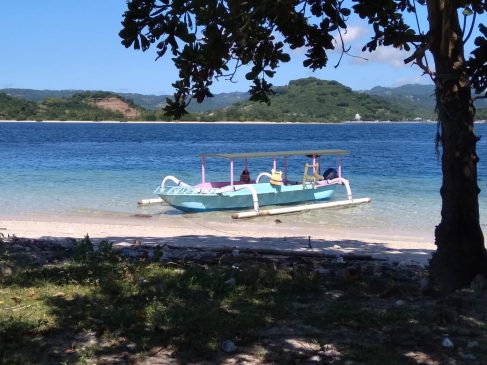
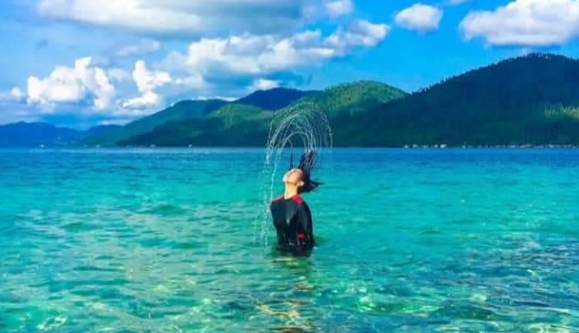
Talking about the small island that surrounds the island of Lombok is very much, consisting of 43 small islands that surround the island of Lombok (there are still some unknown), for the small island the Lombok people call it ” Gili ” which adorns the sea when we are on the beach.

There are only 13 Gili that are ready to visit but in this case we will discuss only the popular Gili, including 7 Gili, Gili Trawangan, Gili Meno, Gili Air, Gili Nanggu, Gili Tangkong, Gili Sudak, Gili Kedis, Gili Gede, Gili Rengit Gili Kondo, Gili Merengke. Especially the series of the 3 most popular Gili is Gili Trawangan, Gili Meno and Gili Air which are located in the “northwest” of the island of Lombok.

These three Gili are very popular for foreign and domestic tourists, especially among people who like to walk, the most important among the three Gili is Gili Trawangan which has been used as an idol to be visited by Indonesian celebrities.

Even almost all Indonesian celebrities have visited Gili Trawangan for those who want to travel to Gili Trawangan at least prepare a decent budget because whatever we are going to buy must be expensive.

Likewise, Gili Meno is located in the southeast of Gili Trawangan or its position is flanked by Gili Trawangan and Gili Air, Gili Meno among the three Gili Islands is the smallest and has a saltwater lake on the west side of the island but the available accommodations are very a rare.

The road infrastructure that surrounds the island is only a little and does not construct only the footprints of dirt roads even on the west side only consists of white sandy beaches and 100% of the island is surrounded by white sand.

One of the three islands which has a bird park located in the heart of the island, there are no party activities at night, at night it is quieter and suitable for tourists who seek tranquility, but certainly the sea park that deletes this island is more beautiful than Gili Trawangan because the marine park is not disturbed by the existence of boat trips like the ones in the Gili Trawangan.

Gili Air is the source of the origin of the native people of the Gili people who originally were nomadic fishermen from Sulawesi (Bugis) who settled first on this island and developed into a group of large family groups Gili Air is not much different from other Gili (Trawangan and Meno).

Only compared to the two Gili, Gili Air has the best location for snorkeling among the three Gili, especially on the east side of the island where tourists can feed fish or feed fish while snorkeling.

For more details see on other pages of the blog that I have written specifically so that there will be no double writing for that enough I will provide a list of the names of Gili surrounding the island of Lombok but not all of the dyke listed as tourism destinations are just for us to know as an insight into the small islands.

That surrounds the island of Lombok but does not rule out the possibility that one by one the registered Gili will be developed into a Lombok tourism destination in the future, here are Gili names that have been known by their names.

REGISTERS OF 35 GILI NAMES THAT HAVE BEEN KNOWN THAT SURROUND THE LOMBOK ISLAND;

Northwest of Lombok Island

  1. Gili Trawangan
  2. Gili Meno
  3. Gili Air

Northeast of Lombok Island

  1. Gili Lawang
  2. Gili Sulat
  3. Gili Petagan
  4. Gili Bidara
  5. Gili Lampu
  6. Gili Puyu
  7. Gili Kondo
  8. East Lombok Island
  9. Gili Puyuh
  10. Gili Sulat

Southeast of Lombok Island

  1. Gili Indah
  2. Gili Merengke
  3. Gili Belek
  4. Gili Snake
  5. South of Lombok Island
  6. Gili Solet
  7. Gili Sarang Burung
  8. Gili Kawu
  9. Gili Puyuh
  10. Gili Sayak
  11. Gili Anak Ewok
  12. Gili Golong
  13. Gili Anak Anjan
  14. Gili Medas
  15. Gili Nuse
  16. Gili Sarang
  17. Gili Kao
  18. Gili Kere
  19. Gili Hang Sango (from east to west)

Southwest of Lombok Island

  1. Gili Nanggu
  2. Gili Sudak
  3. Gili Tangkong
  4. Gili Kedis
  5. Gili Poh
  6. Gili Genting
  7. Gili Lontar
  8. Gili Layar
  9. Gili Amben
  10. Gili Gede
  11. Gili Anyaran
  12. Gili Layar
  13. Gili Asahan